
Hurricane season stretches from June through November, and Fort Pierce and the greater Treasure Coast sit directly in the path of Atlantic storms. While most homeowners focus on shutters, roofing, and flood insurance, many overlook one of the most important protective systems in the home: the building envelope. Your insulation, air sealing, and moisture-control layers quietly serve as a critical line of defense as wind and rain begin to push against your walls and roof.
When insulation is outdated, damaged, or poorly installed, it creates weak points. Hurricane-force winds exploit those gaps, forcing rain into attics and wall cavities. The U.S. Department of Energy reports that air leakage can account for more than 30% of a home’s heating and cooling costs, which signals just how much outside air can move through an unsealed home. During a storm, the same leakage pathway allows moisture to intrude. FEMA notes that water infiltration can saturate insulation, ruin interior finishes, and create conditions for mold growth long after the storm has passed.
The solution is strengthening your home before the first named storm forms. This guide walks Florida homeowners through the insulation upgrades and inspections that help protect against wind-driven rain, water intrusion, and storm-related energy loss. It also explains when it’s time to bring in a professional.
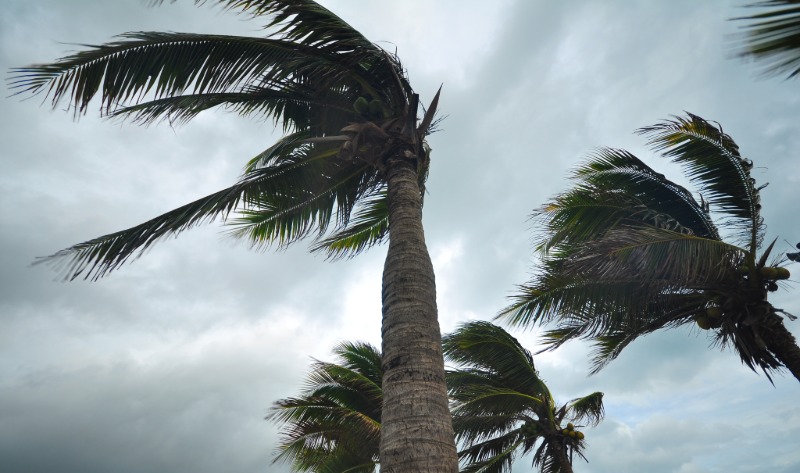
Proper insulation helps protect your Florida home during hurricane season by reinforcing the building envelope against wind pressure, reducing air infiltration that carries moisture indoors, and maintaining energy performance when your HVAC system is working overtime. Spray foam insulation, in particular, insulates and air-seals in a single application, making it one of the most effective solutions for attics, walls, and other vulnerable areas.
Not sure if your insulation is hurricane-ready? A professional insulation inspection can identify vulnerable areas before storm season begins.
Fort Pierce and the Treasure Coast fall within IECC Climate Zone 2, a hot-humid region where the Florida Building Code establishes specific R-value and air sealing requirements. The Florida Building Commission emphasizes that managing both heat and moisture loads is essential in this climate. In other words, insulation in Florida is not just about comfort. It is about durability, protection, and long-term resilience.
How Hurricanes Damage Homes Through the Building Envelope
Wind-Driven Rain and Air Infiltration
Hurricanes begin at 74 mph, but gusts often exceed that. These winds create extreme pressure differences on your home’s exterior. When the building envelope has gaps, wind forces water through them. This is where hurricane wind-resistant insulation becomes critical.
FEMA’s post-Hurricane Michael assessment found that water infiltration through poorly sealed attics and walls can saturate insulation and cause interior damage. The NOAA National Hurricane Center confirms that wind, storm surge, flooding, and tornadoes are the primary hurricane hazards, and all interact with insulation and envelope systems.
Without proper air sealing and hurricane protection, wind-driven rain penetrates wall cavities and attic spaces.
What Storm Damage Looks Like Inside Your Walls
- Water-saturated fiberglass batts lose R-value and sag.
- Trapped moisture promotes mold growth.
- Wood framing begins to rot.
- Drywall often requires removal at least one foot above flood lines after storm damage.
FEMA identifies closed-cell spray foam as a flood-resistant building material that can withstand up to 72 hours of water exposure, unlike traditional insulation materials.
How Insulation Protects Your Florida Home During Hurricane Season
Air Sealing: Your First Line of Defense
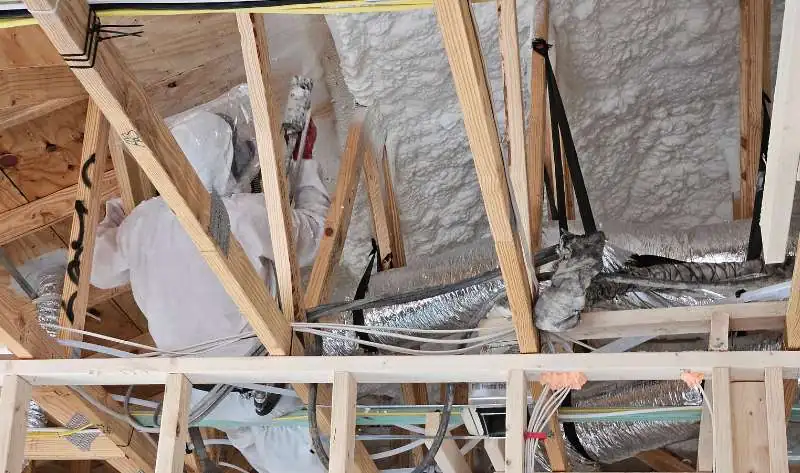
The U.S. Department of Energy states that reducing air leakage improves durability, comfort, and indoor air quality. When insulation also functions as an air barrier, it becomes part of your storm defense system. Spray foam insulation insulates and air-seals in a single application, eliminating gaps where wind-driven rain can penetrate.
Controlling air leakage is also critical for moisture control in hot-humid climates like Florida.
Spray Foam: The Hurricane-Rated Solution
Not all insulation performs the same under storm conditions.
Closed-cell spray foam delivers a higher R-value per inch than many traditional materials and offers strong resistance to moisture absorption. Its dense structure can add rigidity to framing assemblies, contributing to overall structural integrity.
DOE Building America research in hot-humid climates shows that spray foam used directly as roof deck insulation can significantly reduce attic temperatures and bring ductwork into the conditioned envelope. During hurricane season, this approach does more than improve efficiency. It helps protect critical mechanical systems from extreme heat and humidity.
Research and demonstration projects at the UF/IFAS Windstorm Damage Mitigation Centers in Fort Pierce and throughout Florida further show how advanced insulation systems, when properly installed, contribute to improved performance during Category 4 and 5 hurricane events.
Roof Deck and Attic Protection
If there is one area of your home that takes the brunt of a hurricane, it is the attic. When a roof covering is damaged or lifted, wind and rain can enter quickly. Once inside, insulation can be displaced, soaked, or rendered ineffective, not to mention the damage caused to building materials. That is why attic design and attic hurricane strategy matter.
The DOE’s Building Science Education Solution Center recommends installing wind dams and baffles in every rafter bay with a soffit vent to help keep insulation in place during high winds. These components prevent airflow from pushing insulation out of position and maintain consistent coverage.
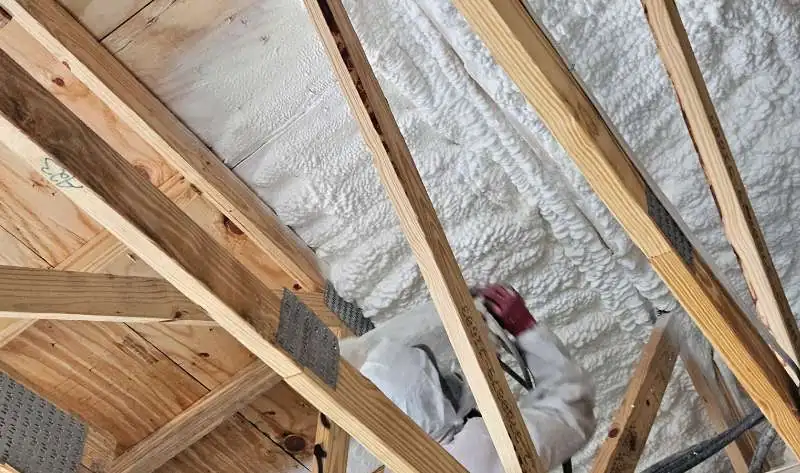
Applying spray foam directly to the underside of the roof deck creates an unvented, sealed attic assembly. This approach strengthens the connection between the roof and walls, reduces the likelihood that wind uplift affects insulation performance, and limits the pathways for rain to enter the living space.
Pre-Hurricane Insulation Checklist for Florida Homeowners
1. Inspect Your Attic Insulation
- Look for gaps, sagging, or displaced insulation, especially around soffits, ridge vents, and penetrations.
- Ensure insulation depth meets Climate Zone 2 requirements (minimum R-30 ceiling insulation).
- Verify baffles and wind dams are intact at every rafter bay near soffits.
2. Check Wall and Cavity Insulation
- Examine exterior walls for air leaks around windows, doors, plumbing, and electrical penetrations.
- Seal air leaks around any gaps found using caulk, gaskets, tape, or foam sealants.
- Ensure the materials used provide adequate moisture-barrier protection.
3. Evaluate Moisture Control
The Florida Building Commission stresses that controlling latent moisture loads is essential in Florida’s hot-humid climate to prevent mold and indoor air quality issues.
- Ensure exterior drainage directs water away from the foundation
- Verify that vapor barriers and moisture management systems are intact
4. Review Overall Envelope Strength
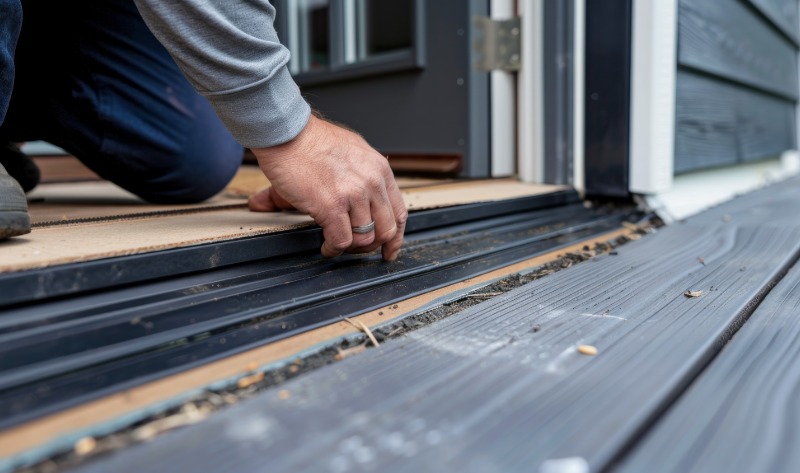
Finally, take a broader look at the home’s exterior shell. Cracks in stucco, siding damage, or failing sealants can allow wind-driven rain to penetrate the structure.
Inspect weatherstripping around doors and windows and replace any worn materials that allow air leaks. Even small openings can become major entry points during hurricane-force winds.
Homes built or upgraded to the current Florida Building Code insulation standards sustain less hurricane damage. Modern codes require:
- Specific R-values
- Maximum air leakage thresholds
- Stronger sealing practices
When to Call a Professional
While some inspection tasks can be handled by homeowners, certain problems require expert evaluation. If you notice large gaps in insulation, signs of water damage, mold growth, or major air leakage, a professional assessment is the safest course of action.
Installing spray foam insulation or upgrading an insulation system should always be handled by trained professionals. Certified contractors ensure proper application, maintain fire-safety compliance, and install materials in accordance with current building codes.
Research from the University of Florida’s IFAS program shows that homes constructed or retrofitted with modern insulation systems and code-compliant construction practices experience significantly less hurricane damage than older homes.
Florida’s energy code for Climate Zone 2 also sets specific requirements for insulation performance, including maximum air leakage levels of 7 ACH50 and defined R-values for walls, ceilings, and floors. A qualified insulation contractor can evaluate whether your home meets these standards and recommend improvements where needed.
If you’re unsure whether your home meets current requirements, contact a trusted Fort Pierce insulation contractor to verify compliance and performance.
FAQ
Does spray foam insulation help during a hurricane?
Yes. Closed-cell spray foam insulates and air-seals simultaneously, resists moisture, and adds structural rigidity to roofs and walls, helping prevent wind-driven rain from penetrating the building envelope.
What insulation is best for hurricane-prone areas?
Closed-cell spray foam is considered the most hurricane-resistant insulation because it resists water absorption, seals air gaps, and can add structural integrity to framing assemblies. FEMA identifies it as a flood-resistant material.
How does insulation reduce hurricane damage?
Insulation protects homes by improving hurricane wind resistance, sealing the building envelope against wind-driven rain, preventing air pressure differentials that can lift roofs, and maintaining the structural integrity of attic and wall systems during high winds.
Should I upgrade insulation before hurricane season?
Yes. Inspecting and upgrading your insulation before June 1 gives you time to seal air leaks, replace damaged insulation, and ensure your home’s building envelope meets current Florida Building Code requirements.
Conclusion
Hurricane season is the ultimate test of your home’s building envelope. Proper insulation and hurricane protection in Florida provide a powerful defense against wind, water, and energy loss.
A well-insulated, air-sealed Florida home protects your family, your property, and your energy bills before, during, and after a storm.
Contact Leed Insulation today to schedule your free inspection. With over 35 years of experience serving Fort Pierce and the Treasure Coast, our certified insulation contractors will ensure your home is hurricane-ready.
References
Federal Emergency Management Agency. (2020). Best practices for minimizing wind and water infiltration damage. https://www.fema.gov/sites/default/files/2020-07/best-practices-minimize-wind-water_hurricane-michael-florida.pdf
Federal Emergency Management Agency. (n.d.). After a disaster, make your home resistant to flood, wind damage. https://www.fema.gov/fact-sheet/after-disaster-make-your-home-resistant-flood-wind-damage
Federal Emergency Management Agency. (n.d.). Building codes basics. Building Codes Toolkit for Homeowners and Occupants. https://www.fema.gov/sites/default/files/documents/fema_building-codes-basics.pdf
Florida Building Commission. (n.d.). Energy and humidity in Florida homes. https://www.floridabuilding.org/fbc/committees/energy/EnergyHumidityForumReport.htm
Florida Solar Energy Center. (2021). Comparison of the residential provisions of the 2020 Florida Building Code, Energy Conservation and the 2021 IECC. Florida Building Commission. https://www.floridabuilding.org/fbc/commission/FBC_0621/Energy_TAC/Res_2021_IECC_vs_2020_FBC-EC_Code_Review_Draft_Final_Report.pdf
National Hurricane Center. (n.d.). Hurricane preparedness: Hazards. National Oceanic and Atmospheric Administration. https://www.nhc.noaa.gov/prepare/hazards.php
U.S. Department of Energy. (n.d.). Air sealing your home. Energy Saver. https://www.energy.gov/energysaver/air-sealing-your-home
U.S. Department of Energy. (n.d.). Air sealing for new home construction. Energy Saver. https://www.energy.gov/energysaver/air-sealing-new-home-construction
U.S. Department of Energy. (n.d.). Guides and case studies for hot-humid climates. Building America. https://www.energy.gov/eere/buildings/guides-and-case-studies-hot-humid-climates
U.S. Department of Energy. (n.d.). Types of insulation. Energy Saver. https://www.energy.gov/energysaver/types-insulation
U.S. Department of Energy. (n.d.). Insulation wind dams. Building Science Education Solution Center. https://bsesc.energy.gov/energy-basics/wind-dams
University of Florida, Institute of Food and Agricultural Sciences. (2004, September 14). UF “Hurricane House” shows little damage after direct hit by Hurricane Frances. UF/IFAS News. https://blogs.ifas.ufl.edu/news/2004/09/14/uf-hurricane-house-shows-little-damage-after-direct-hit-by-hurricane-frances/
University of Florida. (2005, June). Research: Florida getting better at protecting homes from hurricanes. UF News. https://archive.news.ufl.edu/articles/2005/06/research-florida-getting-better-at-protecting-homes-from-hurricanes.html