
Living on Florida’s Treasure Coast provides stunning ocean views and salty breezes every day. But residing along the Atlantic Ocean, from the barrier islands to Stuart and the cities in between, also brings salty, humid air. Homeowners watch this air slowly corrode their cars, patio furniture, grills, and railings. Most assume the damage stops outside, but it doesn’t.
Salt air and coastal homes share a relationship that goes far deeper. That same salt-laden, humid air moves through your attic vents and building envelope leaks year-round, reaching metal connectors, ductwork, air handlers, and insulation that homeowners never see.
The building envelope of your coastal home is everything that separates indoor conditioned air from outdoor air. That includes your roof, walls, insulation, and air sealing layers. Sealing your building’s envelope is the best way to keep that salty, humid air from riding into your vented attic and accelerating the corrosion of your home’s metal building components. UCF’s Florida Solar Energy Center (FSEC) agrees. They have found that sealed attic systems keep wind-blown moisture and salt-laden air out of waterfront properties. Spray foam insulation does the job well, air sealing and insulating in one step.
Consider a free professional insulation evaluation to find out where your coastal home’s envelope is letting in salt-laden air.
What Salt Air Actually Does to Building Materials
Corrosion is an electrochemical reaction, with moisture, oxygen, and salt driving it. Our humid climate, especially the coastal areas of the Treasure Coast with its saline moisture, checks every box for salt air corrosion in Florida. Once rust starts on untreated iron or steel, it keeps spreading until the metal is entirely corroded. Aluminum exposed to moist, salty air takes its own hit. Aluminum trim in sliding glass doors is a common casualty for many homes.
Visible damage on railings and fixtures is easy to spot. But hidden damage, like hurricane straps and truss plates inside walls, is not. FEMA recommends installing corrosion-resistant connectors and fasteners wherever airborne salts contribute to corrosion. Check out FEMA’s technical bulletin specifically about corrosion protection for metal connectors and fasteners in coastal areas.
Where Salt Air Gets into the Building Envelope
Vented attics
Passively vented attics draw large amounts of moisture-laden outdoor air inside during humid morning and evening hours. On waterfront properties throughout communities like Port St. Lucie and Vero Beach, that air also carries wind-blown moisture and salt. A sealed attic keeps out both.
Soffit, ridge, and off-ridge vents
These vents are designed to admit outdoor air. On the coast, that means salt-laden air passes directly over a home’s ducts and air handler.
Air leaks
Gaps at top plates, penetrations, recessed lights, and rim areas let humid air migrate into wall cavities and conditioned space.
Concrete block walls
A sealed attic salt air cannot easily penetrate, paired with filled block cores, closes off most of a home’s exposure. Injection foam for concrete block homes fills those cores directly.
Uninsulated block cores are common throughout the many concrete block homes along Florida’s Treasure Coast. They easily allow air and moisture to move into the wall itself.
Refer to this quick checklist of the most common home entry points for moist, salt air:
Checklist of Salt Air Entry Points
- Vented attics
- Soffit, ridge, & off-ridge vents
- Air leaks
- Concrete block walls
What It Costs You — Comfort, Equipment, and Energy
The building envelope works as your home’s first line of defense year-round, during any kind of weather. Hurricanes are the exam. Salt air is the daily homework. Without proper protection, you pay the price in several ways.
Your structure suffers
Corroded connectors lose strength exactly where wind resistance depends on them. FEMA recommends replacing unsound exposed connectors with corrosion-resistant ones.
You deal with condensation on your HVAC unit
While air handlers and ductwork sit in the salt-laden air stream of a vented coastal attic, the humid air can condense on the cool ducts. Salt air HVAC corrosion often shows up only after a technician spots pitted coils.
Your home consumes more energy
Heating and cooling account for 52% of a typical U.S. household’s annual energy use. In Florida’s hot-humid region, air conditioning alone makes up 27% of that spending, and a leaky building envelope makes it worse.
It’s important to know how to protect your home from both daily salt exposure and incoming storms. Insulation and air sealing are good places to start. Learn more about how insulation protects your home during hurricane season.
How to Harden a Coastal Building Envelope
Follow these steps for the best protection from Florida’s moist, salt-heavy air.
1. Seal the attic
Sealing the attic comes first. Spray foam at the roofline converts a vented attic into a sealed assembly that keeps out moisture and salty air, while reducing moisture condensation on attic ducts and air handlers.
2. Fill block walls
Most coastal Florida homes are built with concrete block walls. Filling these blocks with injection foam adds insulation and cuts air infiltration through the concrete block.
3. Air seal the rest
Beyond the attic and walls, air sealing coastal home projects should focus on closing remaining penetrations, top plates, and rim areas.
4. Replace compromised insulation
Insulation that has absorbed years of humid attic moisture should be removed and replaced instead of buried under new insulation. Professional insulation removal is the best way to start fresh.
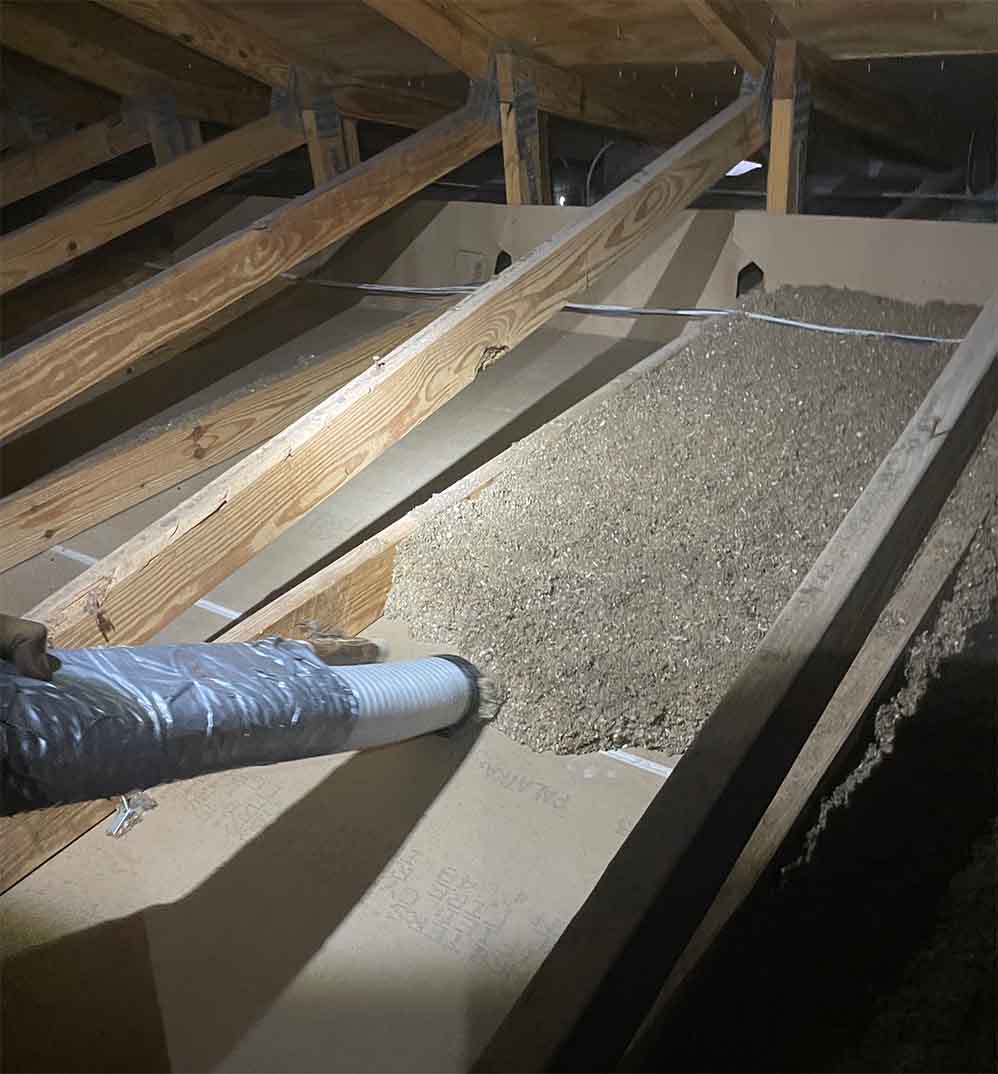
Choose moisture-tough coastal home insulation that Florida contractors trust. FEMA rates closed-cell foam that insulates and air seals as flood damage-resistant while fiberglass, cellulose, and open-cell foam are not acceptable for below-flood-level use.
5.Install corrosion-resistant hardware
For corrosion resistant fasteners coastal homeowners can count on, FEMA recommends installing stainless steel or hot-dip galvanized connectors and fasteners in your home.
Frequently Asked Questions
Does salt air damage homes?
Yes. Moisture, oxygen, and salt work together to drive the corrosion of metals, both visible and hidden, including connectors and HVAC components.
How far inland does salt air affect a home?
Wind direction and exposure matter, but salt air is strongest on the barrier islands and near the shoreline, declining farther inland.
Can salt air get into my attic?
Yes, especially in a vented attic, which intentionally exchanges air with the outdoors. Sealed attics keep salt-laden air out on waterfront properties.
What insulation is best for coastal Florida homes?
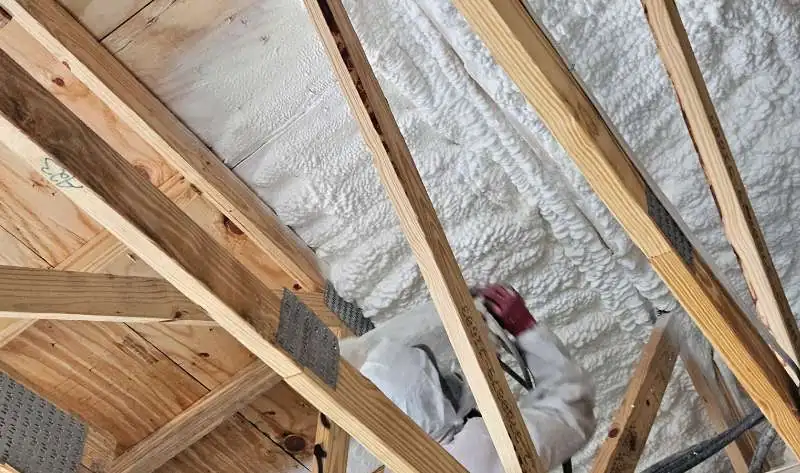
It depends on where the insulation sits. Spray foam seals as it insulates and closed-cell foam is rated as flood damage-resistant per FEMA. Fiberglass works well where it stays dry and gets paired with air sealing.
Should a coastal home have a sealed attic?
A sealed attic benefits a waterfront home by keeping out salt and moisture and reducing duct condensation. A professional evaluation will determine what works best for your specific roof.
The Envelope Decides How Well a Coastal Home Holds Up
Salt air is a slow, year-round force, not a once-a-year hurricane concern. Your home’s envelope, not the paint job, decides how your coastal home holds up. The fix comes down to a short list of priorities: seal the attic, fill the block walls, air seal the rest of the envelope, replace tired insulation, and specify corrosion-resistant hardware.
Treasure Coast and barrier island home maintenance Florida owners can trust starts with knowing where salt-laden air gets in. Leed Insulation and Spray Foam has served Fort Pierce and our Treasure Coast communities for more than 35 years, sealing out salty, humid air before it reaches the parts of your home nobody sees. Contact us today for a free estimate or call us at (888) 528-LEED.
References
Federal Emergency Management Agency. Corrosion Protection for Metal Connectors and Fasteners in Coastal Areas: NFIP Technical Bulletin 8. FEMA, June 2019, www.fema.gov/sites/default/files/2020-07/tb8-corrosion_protection_metal_connectors_coastal_areas.pdf.
Federal Emergency Management Agency. Flood Damage-Resistant Materials Requirements: NFIP Technical Bulletin 2. FEMA, Jan. 2025, www.fema.gov/sites/default/files/documents/fema_tb_2_flood_damage-resistant_materials_requirements_01-22-2025.pdf.
Parker, Danny S. Literature Review of the Impact and Need for Attic Ventilation in Florida Homes. FSEC-CR-1496-05, Florida Solar Energy Center, University of Central Florida, 31 May 2005, https://publications.energyresearch.ucf.edu/wp-content/uploads/2018/06/FSEC-CR-1496-05.pdf.
Peart, Virginia. “Avoiding Corrosion Problems in Florida.” FCS3141, Florida Cooperative Extension Service, Institute of Food and Agricultural Sciences, University of Florida, Jan. 2003, https://ufdcimages.uflib.ufl.edu/IR/00/00/25/82/00001/he60500.pdf.
U.S. Energy Information Administration. “Air Conditioning Accounts for About 12% of U.S. Home Energy Expenditures.” Today in Energy, 23 July 2018, www.eia.gov/todayinenergy/detail.php?id=36692.
U.S. Energy Information Administration. “Use of Energy Explained: Energy Use in Homes.” Energy Explained, www.eia.gov/energyexplained/use-of-energy/homes.php.